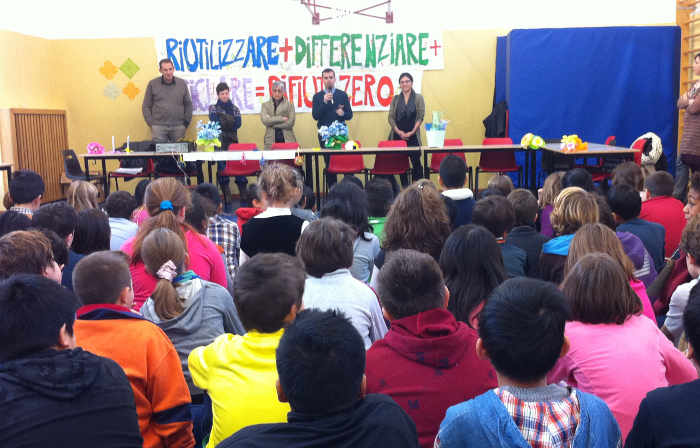
.jpg) Many families now experience situations of material deprivation, difficulties and isolation due to circumstances have changed such as employment downturns and decreases in the quality and quantity of consumption. These are the “new poverties.”
Many families now experience situations of material deprivation, difficulties and isolation due to circumstances have changed such as employment downturns and decreases in the quality and quantity of consumption. These are the “new poverties.”
The Bologna City Government in its 2013 budget assigned 4.5 million Euros to the creation of an anti-crisis fund: one million for the housing problem, three million for projects aimed at creating employment, and half-a-million to the welfare sector for work inclusion.
With reference to the latter, the Don Paolo Serra Zanetti Institute for Social and Community Inclusion suggested an original project that is based on the re-appropriation of one’s own identity as citizens, and on the ability to provide supportive responses, both of which form part of Bologna’s history: the Zanardi Houses project, inspired by an initiative to tackle poverty during the postwar of the 1st World War, devised by the then-mayor Francesco Zanardi.
This project does not merely offer opportunities to fight the economic crisis and create new employment inclusion. The project, in fact, uses the crisis as an occasion for change, as a chance to bring all social actors—public and private—together in endorsing a “solidarity pact” and in joining the common search for new inventive solutions to the crisis. The idea is based on a shared assumption of social responsibility in fighting unemployment and social exclusion, with an additional commitment on the part of the citizens community: reducing waste and promoting supportive and eco-sustainable living.
 -To create a network of public and private partners in order to cope with social needs.
-To provide employment opportunities and training for people at risk of poverty or social exclusion.
-To promote waste reduction and a more responsible and sustainable lifestyle.
 The Zanardi Houses project began with a public call for planning proposals focused on three main issues:
1 – the fight against “work waste:” initiatives meant to create information and job-orientation points, supporting new forms of employment (also fostering entrepreneurship), especially in the areas of eco-sustainability, information and communication technologies, social cohesion and solidarity.
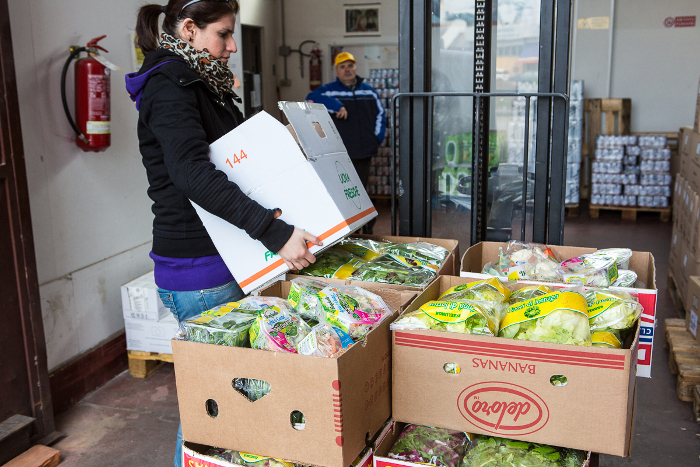
2 – the fight against the waste of food and non-food goods: initiatives meant to promote the collection and distribution of foodstuffs to people in difficult situations, and the establishment of a regular system of barter/exchange and recycling/re-usage of non-food goods for free-of-charge distribution, to round out the actions taken in the fight against “work waste.”
3 – the fight against “relations-related waste:” initiatives meant to support the implementation and enhancement of social capital, that are to be connected and integrated with the above-mentioned initiatives, to fight isolation and social exclusion; to promote solidarity, mutual aid, and education on well-informed and responsible lifestyles; and also work in cooperation with the relevant social-assistance service sectors.
Thirty-two project proposals were collected, with the participation of over 100 parties (social cooperatives, volunteer associations, training institutions, public authorities, banks, and several exponential actors). The announcement was not aimed at selecting a single proposal, but rather at encouraging the emergence of local ideas and resources. Therefore, all projects were taken into consideration. Proposals went from fair-trade markets to a rickshaw factory, from community gardens for home grown food to multi-ethnic catering, involving various actors who were used to working with a range of quite different methods and goals.
Co-planning workshops were the tools employed to carry out the integration of all proposals. All of the associations and economic actors joined together in working towards this common goal and committed themselves to cooperating through integration and coordination of skills, experiences, resources, ideas. The whole process resulted in ten general projects, with one communication plan shared by all projects. In the meantime, adequate “containers” had been found: unused and run down public areas that could be restored to host project activities.
The project includes the creation of one or more “one-stop shops,” that is, places where a wide range of services to all citizens would be gathered. Moreover, in the case of social-card holders directed to the project by social service authorities, it provides for “customized” support actions involving public and private actors, in order to direct people towards autonomy to prevent loneliness and loss of confidence. The whole procedure requires a systematized relational approach, including the following aspects: health, housing, employment, micro-credit, food bank, etc.
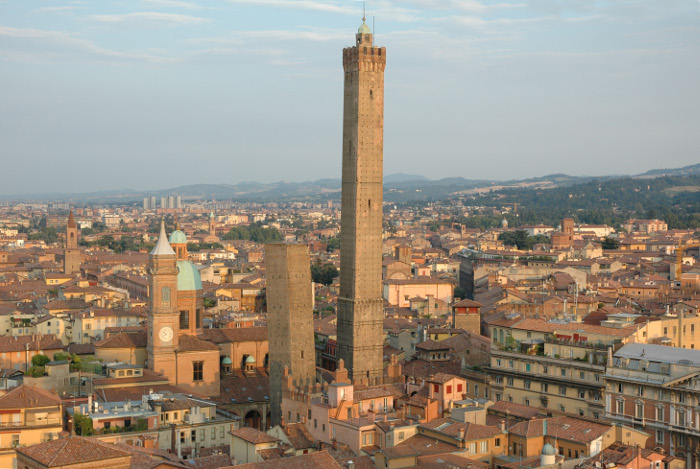
The Municipality of Bologna is one of the most important business cities in northern Italy, mainly because it is a crossroads of goods and people, thanks to its role as a "mobility hub."
According to January 1, 2014 data, Bologna has 384,502 inhabitants with a steadily growing foreign resident population representing more than the 13.7% of the total population, and with an increasing number of elderly people (26% of the population), especially women.
The significant presence of Associations in the city is a reflection of the strong, effective and active citizen participation in Bologna (1400 associations, 400 of which are related to social and health issues). They are directly and/or indirectly supported by the Municipality and represent a relevant resource for social policies.
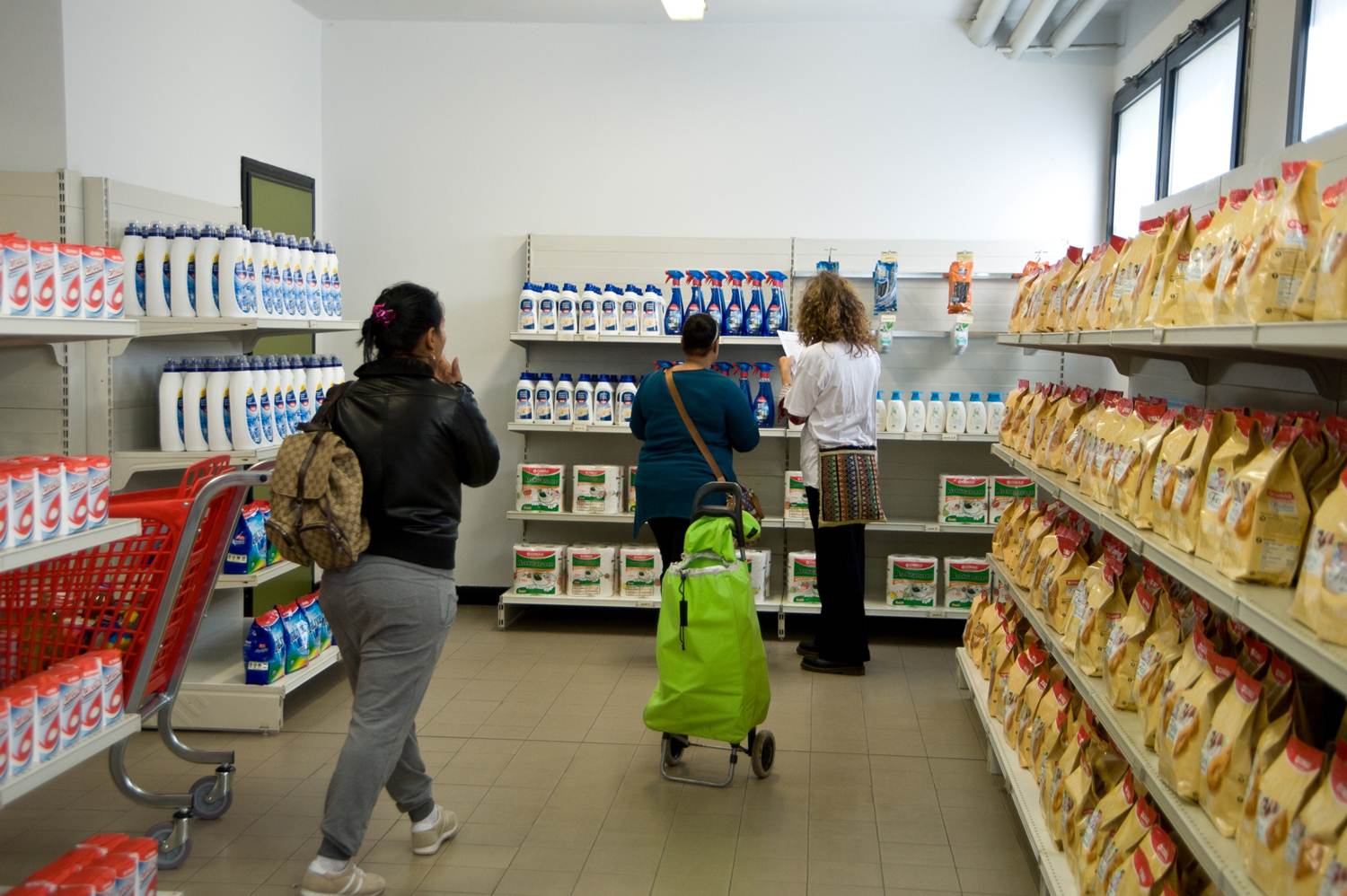
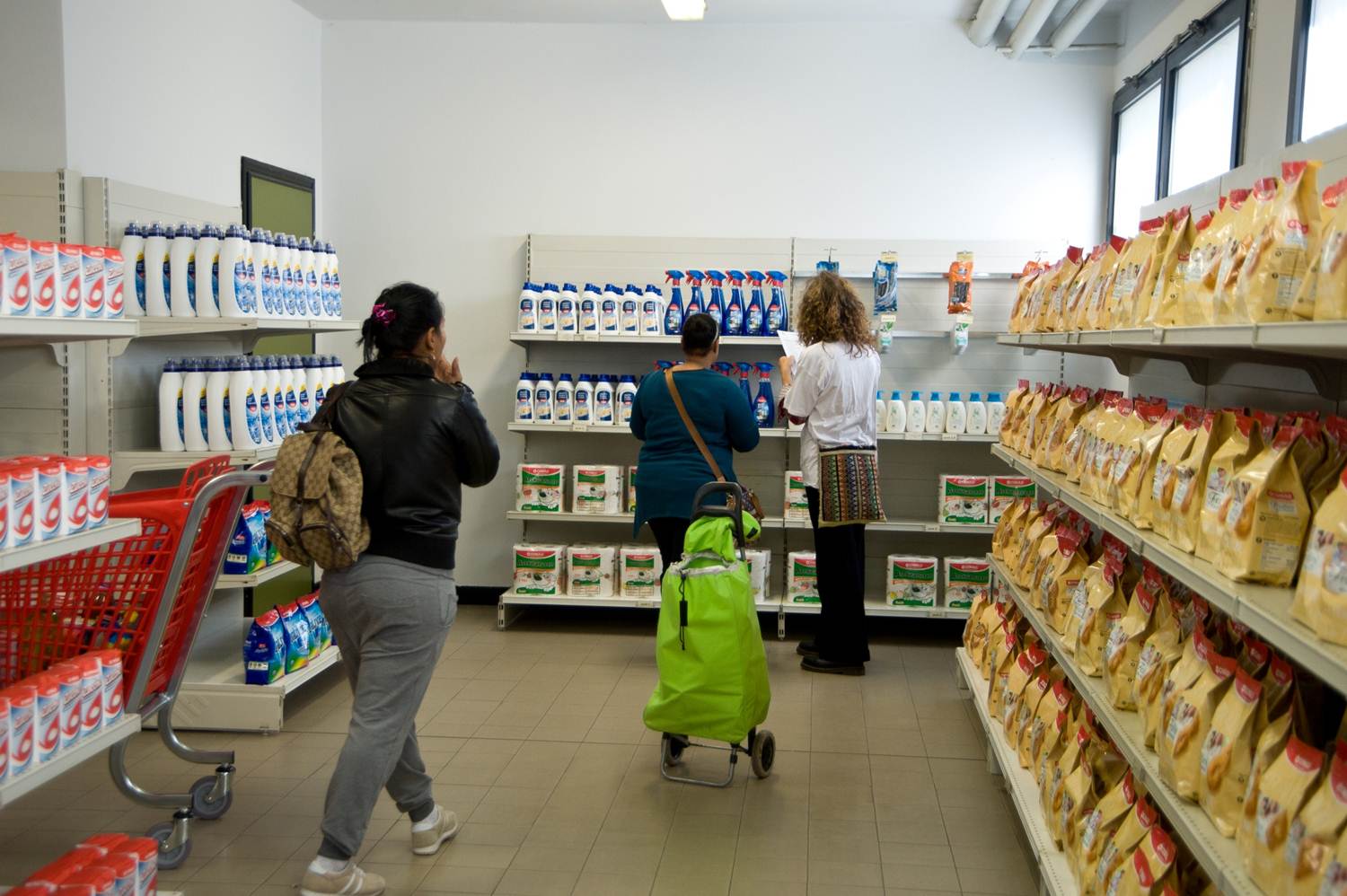
-Two centres have been created for the collection of basic products where the families with few economic resources can be provided with food and basic necessities.
-A digital crowdfunding platform has been created and campaigns have been organised for the collection of basic food in the supermarkets.
-110 people responded to the call for volunteers, 66 of whom have followed a training itinerary and 40 are working in the management of the centres of product collection (logistics, collection, distribution), but also in the support and accompanying of the families.
-A service of labour assessment has been started up, which offers guidance and support in job search, numerous courses of Italian and computer studies, as well as internships with the involvement of distinct cooperatives and local companies. By the end of 2014, 27 internships were active and 20 training courses were programmed.
 Strengths:
-The project is the result of the collaboration of numerous public and private entities, and counts on the support of many volunteers, which has fostered a culture of solidarity.
-Many abandoned spaces have been re-qualified or passed over free of charge, which has contributed to the social and environmental requalification of the city.
Weaknesses:
-The project, based on crowdfunding and fundraising, cannot guarantee either the constant provision of the collection centres of basic products, nor the financing of activities, necessary for the maintenance and the future of the initiative.
-The joint planning processes are often difficult, due to the heterogeneity of the roles and experiences. Furthermore, the complexity of the project sometimes leads to organisational problems.
-The people who benefit from the project are limited (50 families), derived from the social services and beneficiaries of a State subsidy, which means that there are many situations of need that are still not possible to respond to.
Future project:
-To increase the number of beneficiary families, extending it to other families and people who live in emergency shelters or find themselves in the process of moving from one dwelling to another which have been derived from the solidarity network.
-To purchase a thermo-cooled van so as to be able to collect and distribute fresh products.
-To widen the attention service for people looking for work, providing support to companies starting up their business, as well as a service of micro-credits.
-To create new local solidarity structures for concentrating more services, managed by public and private organisations that work in a coordinated way.
