 The sustainable management of municipal spaces, with an interconnection between economic, social and environmental aspects and with a vision of the future, is quite clearly one of the main challenges faced by a city council. In this context, and looking toward the next few decades, the population will be more urban and it will be more concerned about nutrition, health and the environment, so it's vital to carry out projects that ensure food quality and safety based on sustainability and resilience.
These projects must have a powerful element of innovation, taking advantage of local agri-food processes, because in local terms they have a huge potential to create synergies. What's more, the functions of production, demand, distribution, consumption and waste management must be systemically analysed from a circular perspective.
This is the rationale behind the project Generation S: Food Sustainability Programme. The project, implemented in all schools of Esposende, is based on a food sustainability plan that seeks to promote a change in attitudes and behaviors among the new generations in the face of global environmental problems.
Educating for sustainability is about fostering a change in attitudes and behaviours in the face of today's global challenges. This will prepare people who are more capable of exercising a conscious, dynamic and informed citizenship in the face of the future challenges. In this context, and fully integrated with emerging environmental concerns, the city of Esposende recognises that health and the promotion of well-being must occupy a central place in the policies of territories and communities, as they translate into prevalent factors for their sustainable development. Without healthy people, development is limited.
Generation S follows the principles of the Educating City, calling on a wide network of partners to intervene according to a participatory, integrated and inclusive strategy, and involving different agents from the community with a common concern: to contribute to the educational promotion of new generations, acting in a preventive and constructive way.
Taking a holistic and transdisciplinary perspective, the project effectively contributes to the implementation of a series of key subjects at all levels and school cycles, such as health, sustainable development or environmental education, as it's based on knowledge, values, attitudes and behaviours that children and young people should reveal throughout their schooling, on issues that involve the relationship between food/nutrition and health, but also on relationships between sociocultural and individual or collective factors.
| The project has the following objectives: |
 The project has four main axes:
1) Sustainable School Canteens: strategies based on food sustainability have the merit of creating long-term eating habits and putting food choices in the hands of consumers.
2) ReEduca: educational activities that ensure awareness of education in food sustainability.
3) ECOalimenta: strategy to fight against food waste, as well as reduction, reuse, recovery and recycling in the food field.
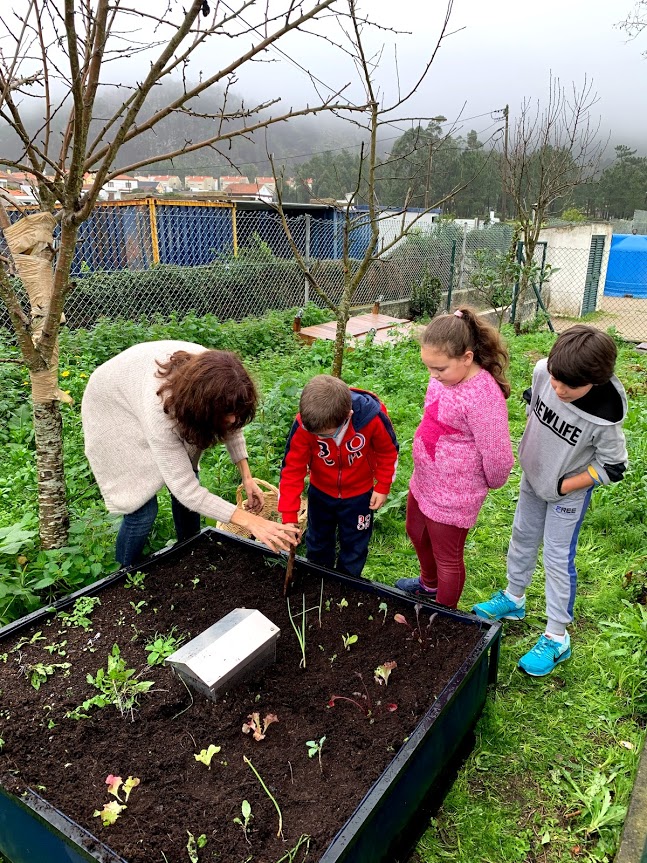
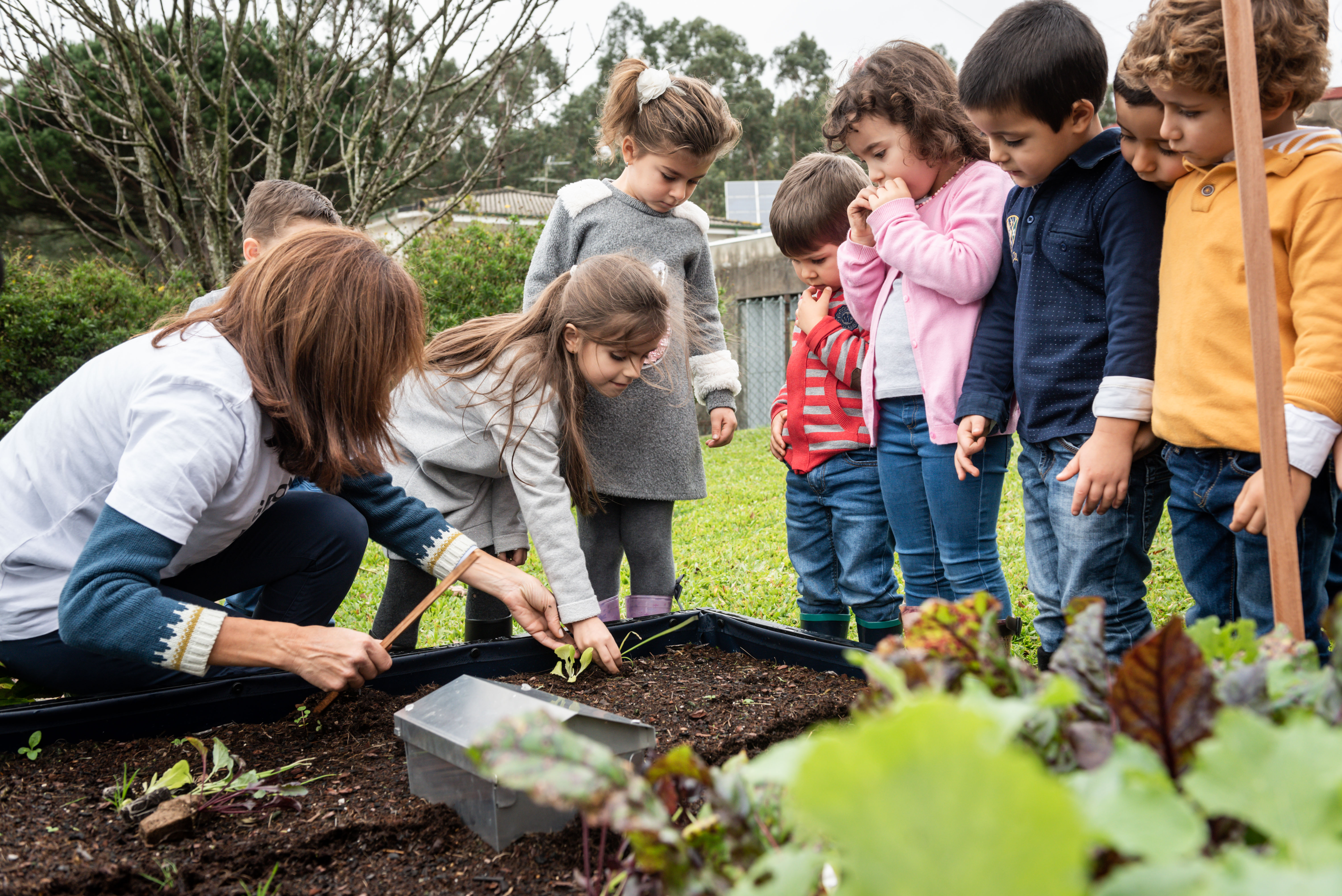
4) AgroKids: development of school gardens for the cultivation of local products.
Generation S aims to raise awareness about how we produce and consume, as these practices add to many of today's environmental problems, such as climate change, pollution, depletion of natural resources, and loss of biodiversity. Quality of life depends on our ability to live within the limits of the available resources, so Generation S seeks to encourage the consumption of local products in the city, especially vegetables and fish.
Sustainable consumption of seafood
Promoting the sustainability of fish and fish resources is an ever-increasing priority, given their increasing consumption, especially in Portugal, which is one of the countries where the most fish is consumed worldwide. However, among the younger generations, this food is losing ground compared to meat consumption.
In this context, in order to promote literacy on the main fish species consumed and caught on the coast, and in order to enable the informed consumption of fish by children and youngsters, the municipality of Esposende promotes several projects related to the sustainability of marine ecosystems; these are the main ones:
 - 'Each fish has a story': it sets out to raise awareness about education for food sustainability through a series of actions that involve the entire community (teachers, students, parents, among others), and which promote positive and long-lasting impacts on the change of healthy eating habits. Ultimately, the project sets out to disseminate popular knowledge about the benefits of fish for physical and mental health, insofar as its consumption is less common in relation to meat.
- ‘Blue Project’: the project is part of the blue economy, based on the reuse of surplus fish from the Esposende store in school menus through an industrial filleting process and healthy and innovative conservation methods. With the participation of Docapesca, the Esposende Fishermen's Association, the Viana do Castelo Polytechnic Institute and chef Mário Rodrigues, the project's objective is to increase the supply of fish in the diet of school canteens.
These projects aim to achieve a change of attitudes and behaviours in the quest for more supportive, socially fairer and environmentally more sustainable consumption patterns.
Generation S is based on a collaborative network involving several local and national partners, organised using a joint governance model with a clear definition of the attributions, contributions and complementarities of each party.

The city of Esposende, composed of nine parishes or wards, is located in the north of Portugal, in the region of Minho. It belongs to the district of Braga and is the only one with coastal territory. It has a population of about 35,000 inhabitants. Its territory extends over an area of about 95 km2, crossed by the Cávado River to the south and the Neiva River to the north.
The schools directly involved in the project are early childhood centres for boys and girls from 3 to 6 years old, and the first cycle of primary schools for children from 6 to 10 years old. The city of Esposende has twenty-three schools in the levels mentioned above, educating about 1,700 children.
The food sustainability programme is an innovative response to the environmental challenges identified, based on the principles of circular economy, decarbonisation and sustainability.
 Strengths:
• Monitoring of the city's school canteen network in terms of food quality and safety;
• Food education actions;
• Commitment of the council and Esposende Ambiente to the project;
• Technical team with lots of knowledge, experience and motivation;
• Involvement of local authorities;
• Strategies defined at the level of municipal policies in the field of health and the environment.
Opportunities:
• Growing concern about food and environmental problems associated with sustainable development;
• Revitalisation of the local economy based on circularity and sustainability standards;
• Legal system and strategic documents on a national level;
• Possibilities for partnerships and funding projects in the context of balanced nutrition and sustainability.
Future challenges:
For the future, the Esposende City Council intend to continue the development of programmes, projects and actions that promote healthy and sustainable eating and to the promotion of a true circular economy, contributing to the health of children and young people and to the sustainability of the community in its environmental, social, and economic aspects.