
 In 2010 the City
Council of Sant Feliu de Llobregat commissioned a study of users of municipal
facilities to determine the degree to which the goals of the facilities were
being met. The study showed that universal access to these facilities had not
been achieved: the participation of low and middle income families was a lot
lower than what should have corresponded to their demographic weight in the
city. The conclusion was reached that municipal services were only accessible
to those with greater earning power because price acted as a barrier to those
with fewer economical resources.
In 2010 the City
Council of Sant Feliu de Llobregat commissioned a study of users of municipal
facilities to determine the degree to which the goals of the facilities were
being met. The study showed that universal access to these facilities had not
been achieved: the participation of low and middle income families was a lot
lower than what should have corresponded to their demographic weight in the
city. The conclusion was reached that municipal services were only accessible
to those with greater earning power because price acted as a barrier to those
with fewer economical resources.
In order to correct this situation and guarantee equality of
access to municipal services, the City Council decided to apply a new public
pricing policy that bore in mind family incomes, and, thus, it instituted social
pricing. This is a calculation
model that replaces the single price with a table of variable prices,
calculated on the basis of family income and the number of members in each
family of users. Social pricing allows for a redistributive policy by applying
more equitable prices. It is a system that directly integrates discounts into
the price without the user having to apply for aid from social services, so
that the price that the user pays for the service is calculated automatically
on the basis of family income.
At this time, in
Sant Feliu de Llobregat, social pricing is being applied to day-care centres,
including the lunch service, music schools and in home care and aid services,
and home telephone assistance for elderly.
 - To facilitate
access of citizens to municipal services and facilities by guaranteeing
equality of opportunities and by adapting public prices to the economic
resources of each family.
- To facilitate
access of citizens to municipal services and facilities by guaranteeing
equality of opportunities and by adapting public prices to the economic
resources of each family.
- To improve equality and efficiency in public pricing.
- To foster the sustainability of municipal services.
 The users can
apply for social pricing when they request services by authorizing the City
Council to check their tax records.
The users can
apply for social pricing when they request services by authorizing the City
Council to check their tax records.
The price applied to the applicant depends on family income. Different categories are defined based on tranches of equivalent income, which is adjusted by monetary income taking into account the total number of family members and including it in the calculation, i.e., basic per capita income for each family. And then prices are set for each of these categories. The price is lower for lower incomes, and, accordingly, a form of progressive reverse taxation is applied.
During the year,
the users, in the event of a substantial variation in income, can ask for a
modification of their fees by providing the pertinent documentation.
A committee has been set up to evaluate unique cases, i.e., those situations in which the family wishes to show that their economic situation has changed, a situation which is still not included in the case types set forth in the application for a revision of fees.
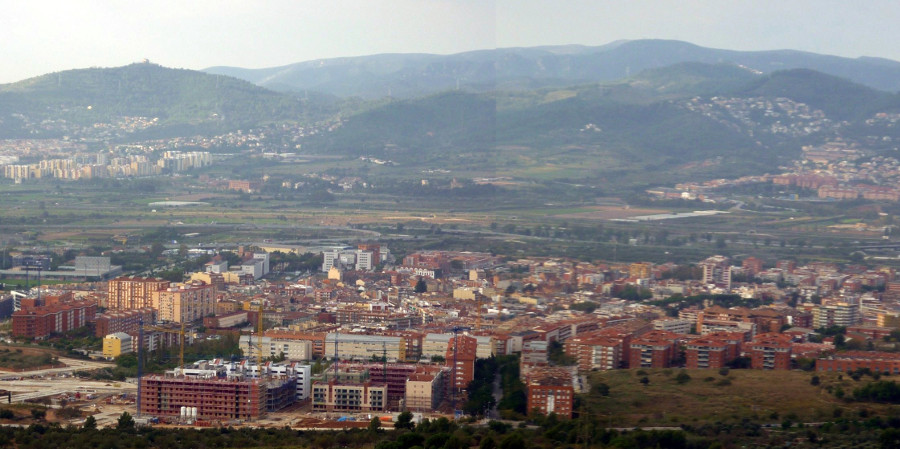 The Catalan city
Sant Feliu de Llobregat, with more than 40,000 inhabitants, is the capital of
the county and occupies a surface area of 11.81 km². It borders the city of
Barcelona.
The Catalan city
Sant Feliu de Llobregat, with more than 40,000 inhabitants, is the capital of
the county and occupies a surface area of 11.81 km². It borders the city of
Barcelona.
The city’s
economy is based on industry and the service sector. Because of its economic
development, its transport links and proximity to Barcelona, Sant Feliu went
through a major increase in population at the end of the 20th century,
which has been consolidated.
Gross disposable family income per resident, according to the Statistics Institute of Catalonia in 2013, totalled Euros 17,500, which is markedly higher than the average for the county and slightly lower than the Catalan average. The generalized trend in the last few years has been one of economic decline, with a steady decrease in the number of companies and employment rates. At this time we see certain indications of a slow economic recovery.
Social pricing
began in practice in 2012 for telephone assistance for the elderly services and
home care; through this reduction in price the number of users grew by 50%.
Social pricing
was applied in the 2013-2014 school year in day-care centres. Approximately 40%
of families paid the same fees that they paid before the new pricing policy,
while 60% paid less. In spite of the decrease in the birth rate, by favouring
access of people with lower incomes, there was an increase in the number of
children registered. At this time 60% more children are using the lunch service
than two years ago.
 During the
2014-2015 school year social pricing was applied to the Municipal Music School
and the number of students has almost doubled.
During the
2014-2015 school year social pricing was applied to the Municipal Music School
and the number of students has almost doubled.
The City Council wishes to extend social pricing to all public municipal services that have a public price, except one-off tickets to shows or activities. By revising and improving the technical and economic criteria that are necessary, we want to apply social pricing to all municipal sport facilities and services, and to workshops, activities, courses, etc., that take place in civic and cultural facilities addressed to the elderly or young people.
Strengths:
- Contributes to transparency and automation.
- Fosters the reduction of social conflicts since it contributes to the
equality of access to municipal public services.
- Puts an end to the culture of subsidies and eliminates the problem of the
social stigma related to them.
- Increases the demand for services, especially from people with low and medium
incomes.
- Eliminates the problems of the exclusion of families, who, in spite of having
low income, were unable to access the subsidy system.
Weaknesses:
To make this pricing model sustainable, we have to precisely
quantify the price of the services. If the City Council does not increase the
price established before application of social pricing, it has to fully bear
the cost related to the tax relief since it will take in less income.
